The Museum of Old and New Art is one the largest privately-owned gallery in Australia. While I really didn’t know what to expect before our visit, I had heard that it was an amazing building but that some of the exhibits were a little controversial. I think it lived up to that description quite well.
We decided to forgo the boat ride from Hobart to the museum in the interest of saving a little money both for the boat and for downtown parking. I’ve heard the boat ride is beautiful but I think it’s most convenient for people who are staying in the downtown area. It just wasn’t practical for us.
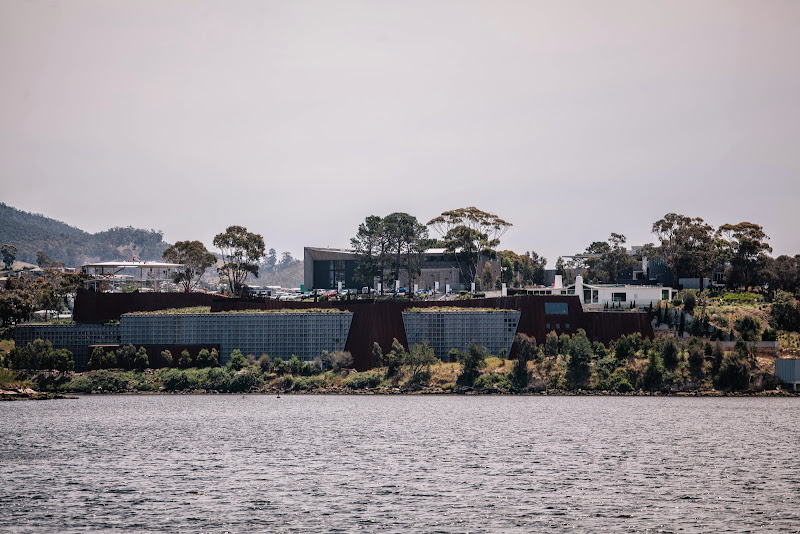
It’s hard to tell from this picture, but the museum building is carved into the side of the limestone cliff which makes it look a lot smaller from the outside that it actually is. It also means that the inside layout is a little quirky to say the least, but more on that shortly.
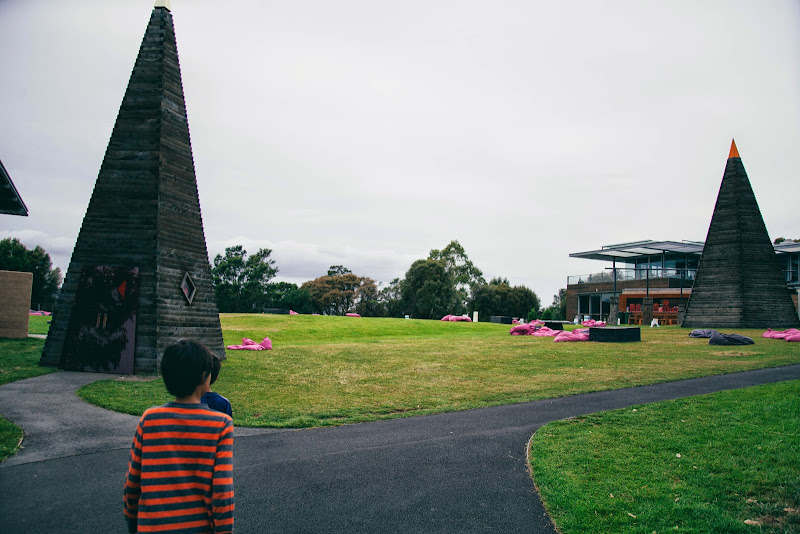
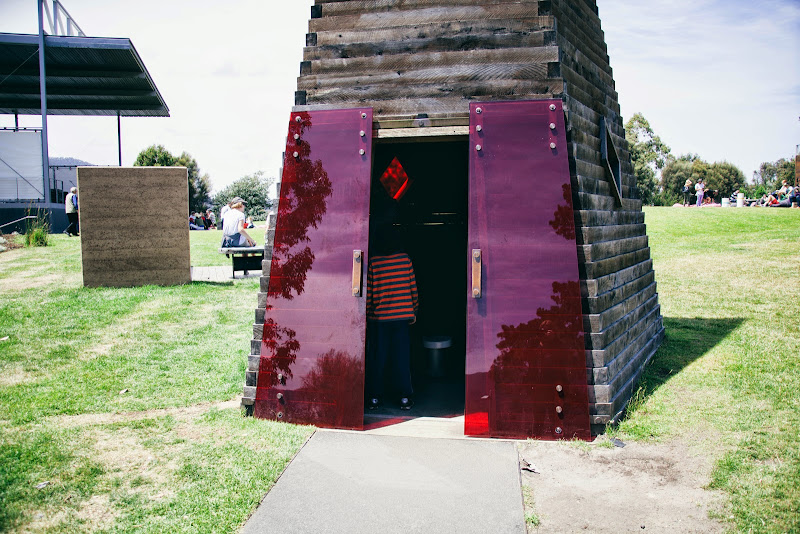
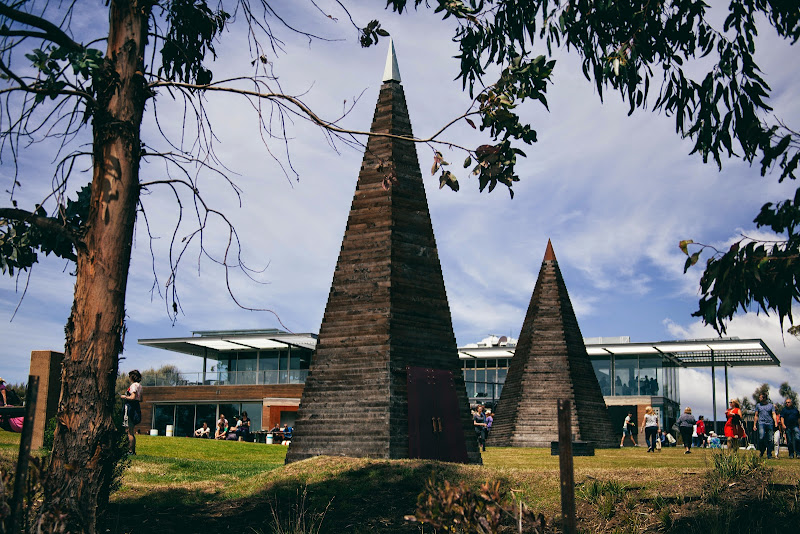
The museum is more than just a building and that becomes obvious as you walk to the entrance past a garden with a stage, a beer garden, multiple bean bags and some interesting pyramid structures.
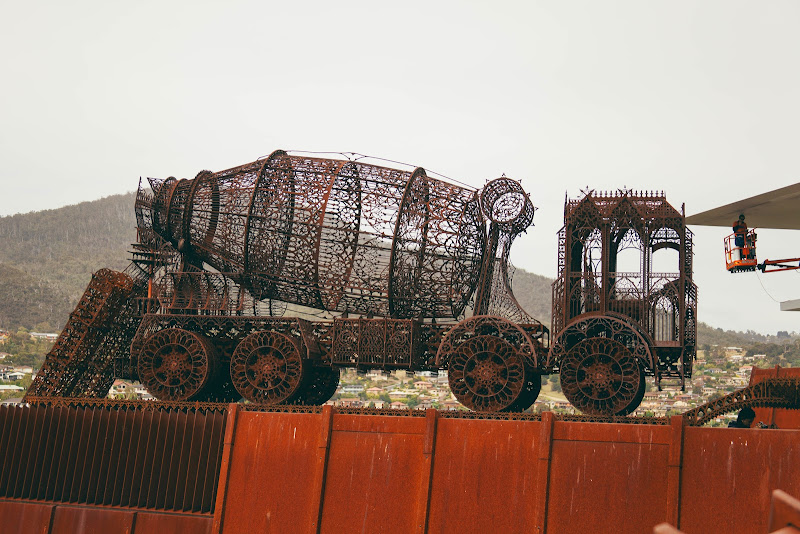
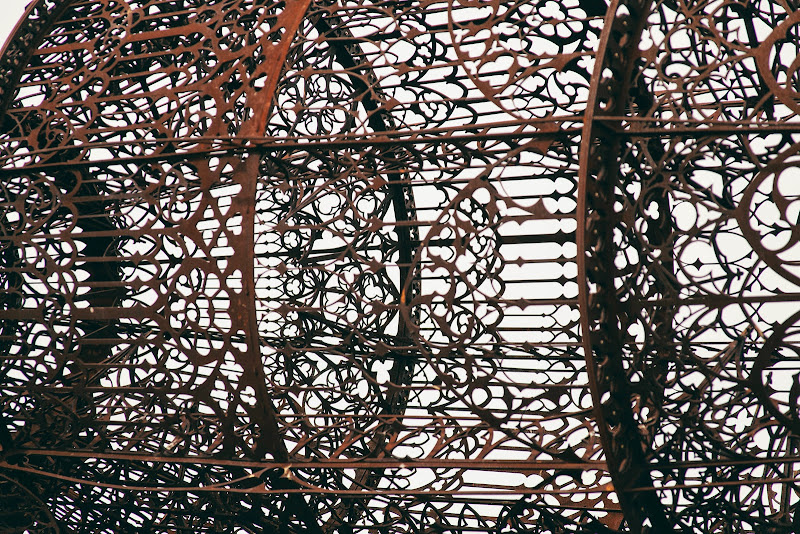
The courtyard just before the entrance holds some pretty amazing sculptures and is host to a great view. This trick made from rusting, yet intricate, metal, was just beautiful.
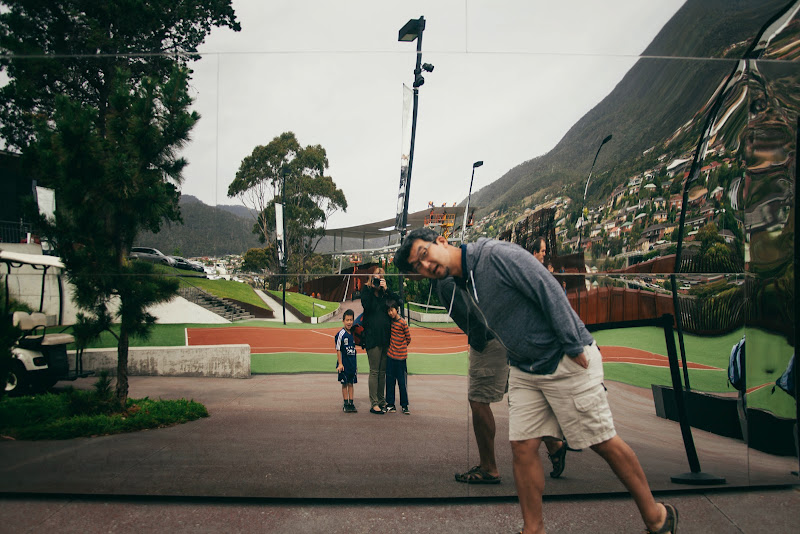
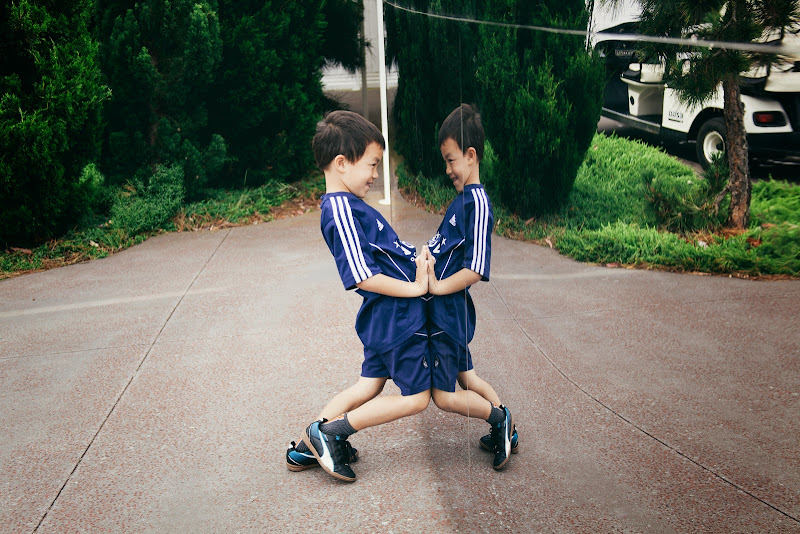
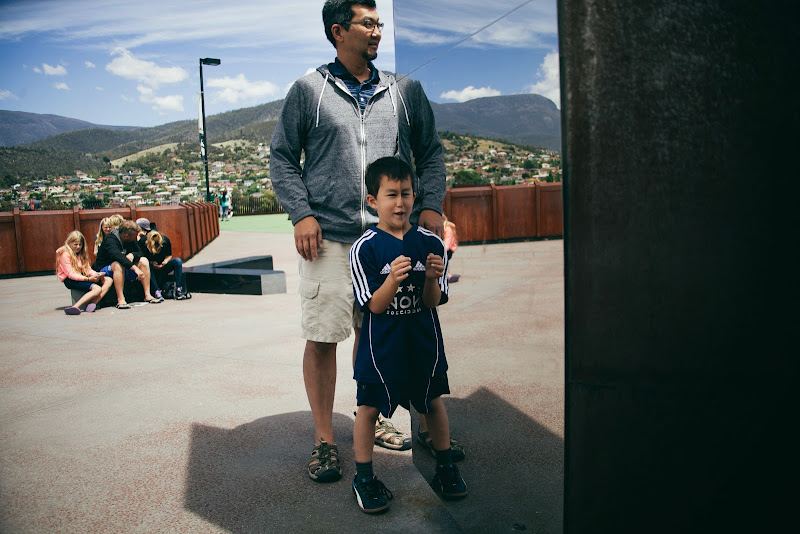
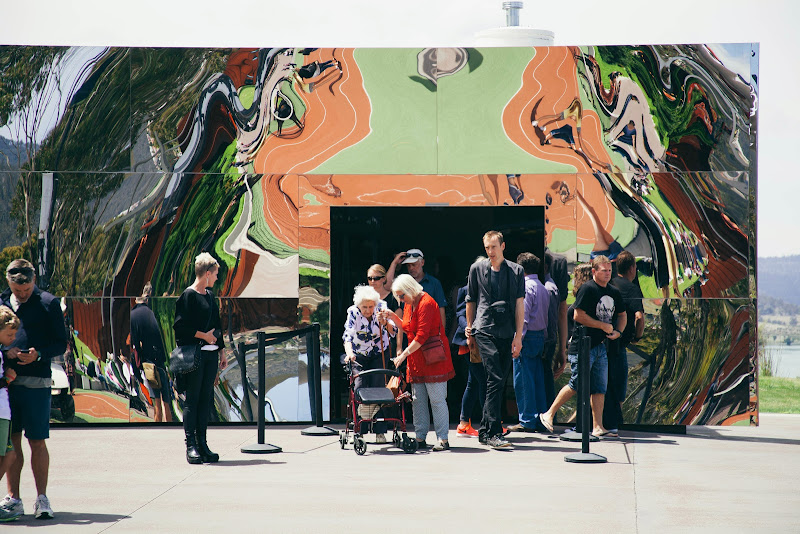
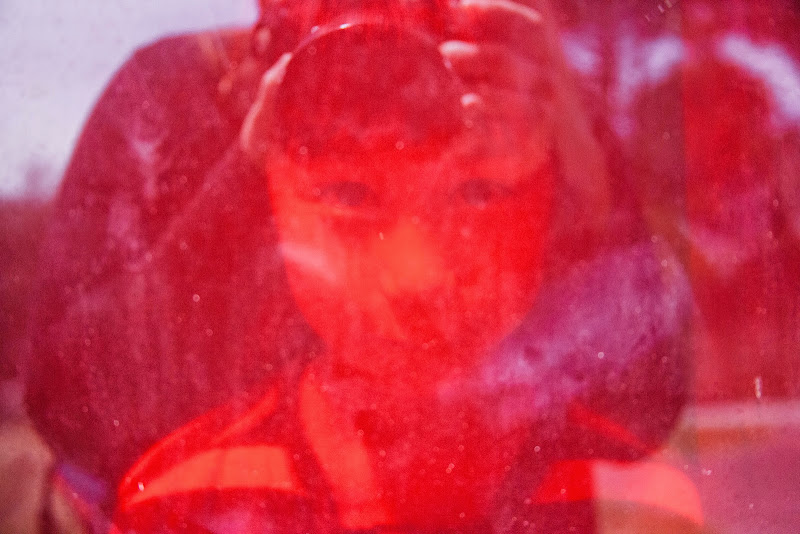
Parts of the outside of the building are covered in a reflective surface…
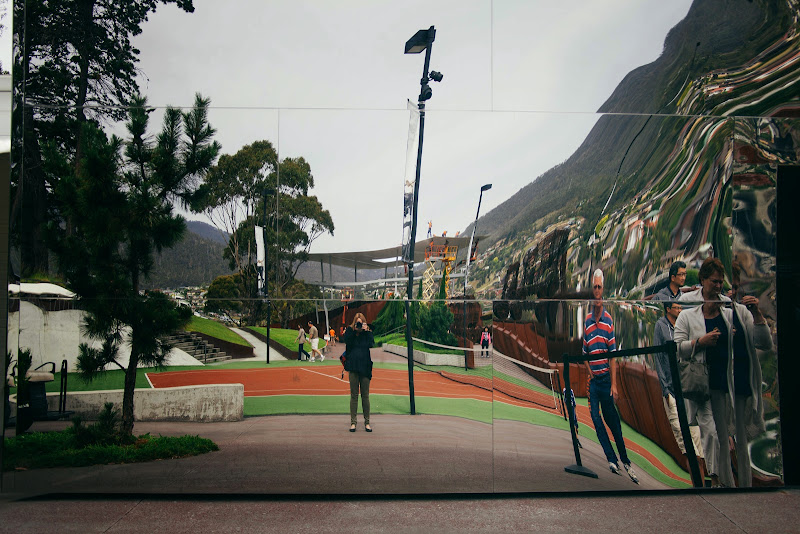
… which provided the perfect opportunity for a family portrait.
After a short wait, we headed inside and were handed iPhones containing a guided tour app. I think this was a great idea and the kids were definitely more interested (duh! electronics!). At the end of the tour, you have the option to send yourself the recording so you can relive the experience all over again. Not that I did look at it again, but it was nice to have the option.
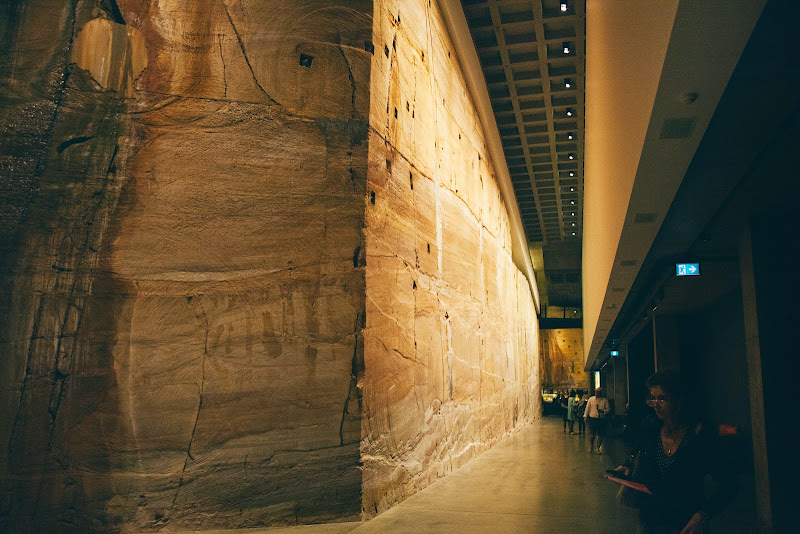
As I mentioned, the building is built into the side of the cliff so this amazing limestone wall is one of the first things you see when you walk down three flights of stairs to the belly of the building.
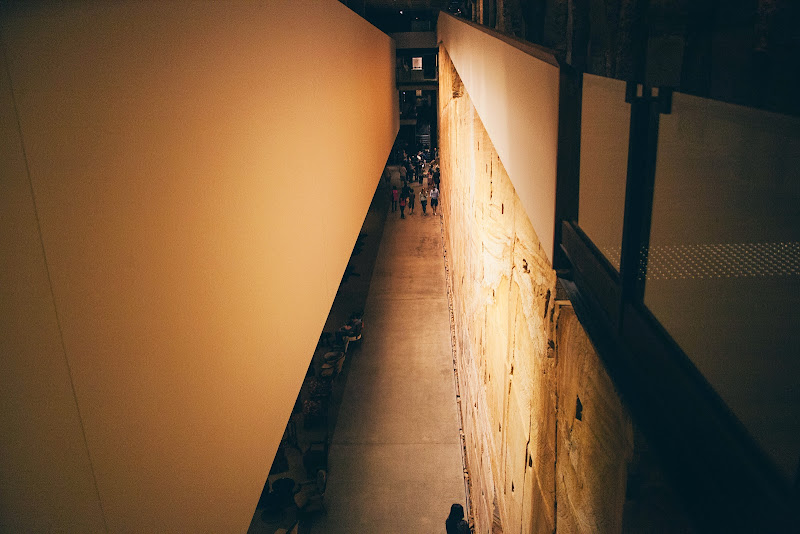

Then it was on to the exhibits. The first one was a temporary exhibit by Matthew Barney that really didn’t make a lot of sense to me. Some of it was very interesting but I didn’t understand why they mixed in Ancient Egyptian artifacts. Here’s the description from the website:
Matthew Barney’s River of Fundament is a sprawling, ambitious interpretation of Norman Mailer’s chequered masterpiece, Ancient Evenings. It comprises a symphonic film by Barney and Jonathan Bepler, an exhibition, and a selection of Egyptian antiquities from Mona’s own collection.
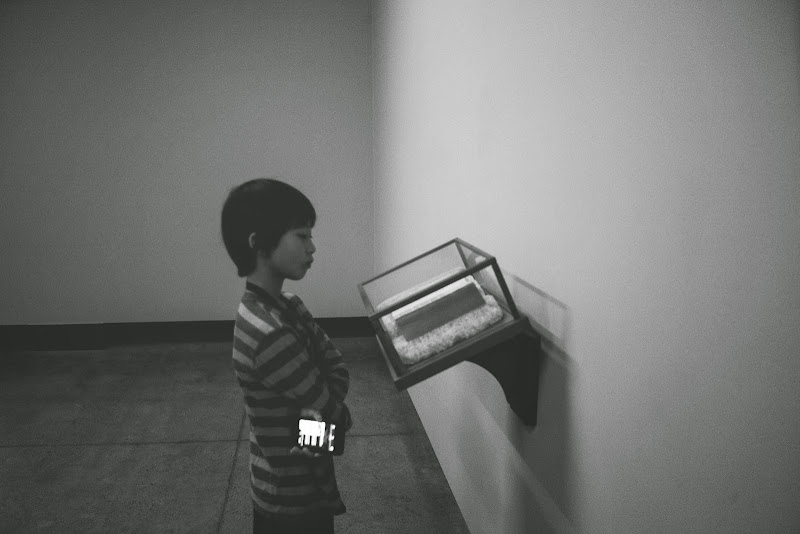
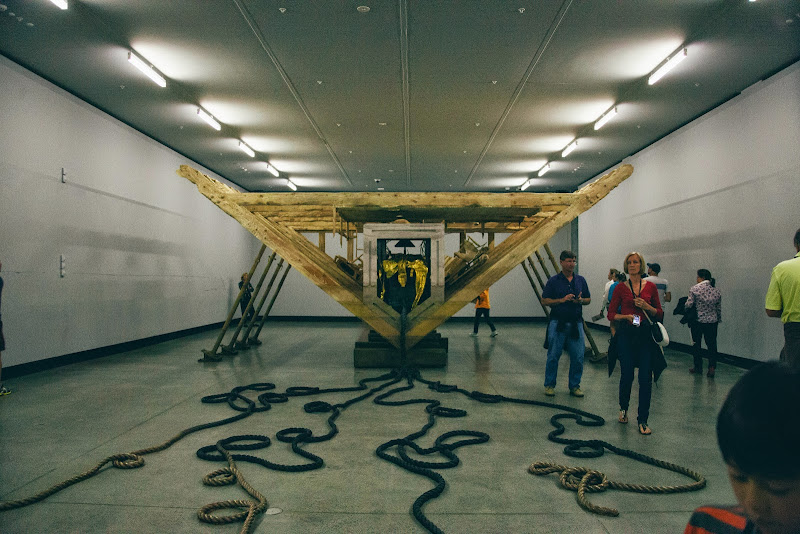
As I mentioned before, building a museum into the side of a cliff means that it doesn’t conform to the classic layout of a museum. I think it was largely intentional in an effort to make this a museum a little more out of the box but the problem is that museums are laid out the way they are for a reason. The large rooms and white walls make it easier to enjoy the art, especially amidst crowds of people. While the unusual hallways and weirdly shaped rooms were interesting, they didn’t allow for a good flow of traffic and could sometimes feel claustrophobic.
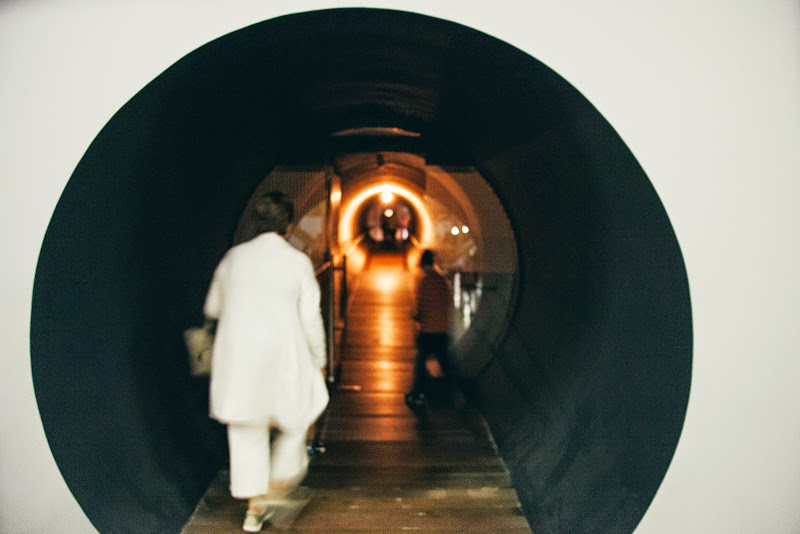
Although this tunnel was very cool. It played sounds as you moved through it.
I really liked this sculpture as well but it was at the end of a long dead-end pyramid-shaped hallway.
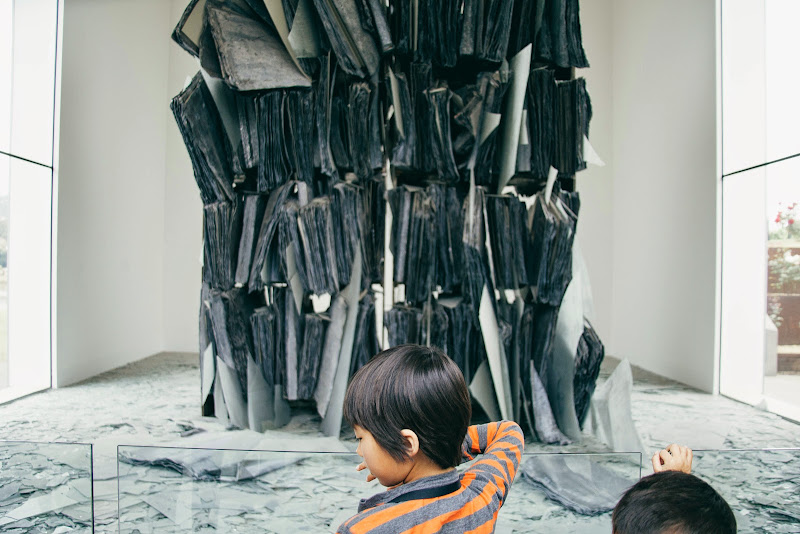
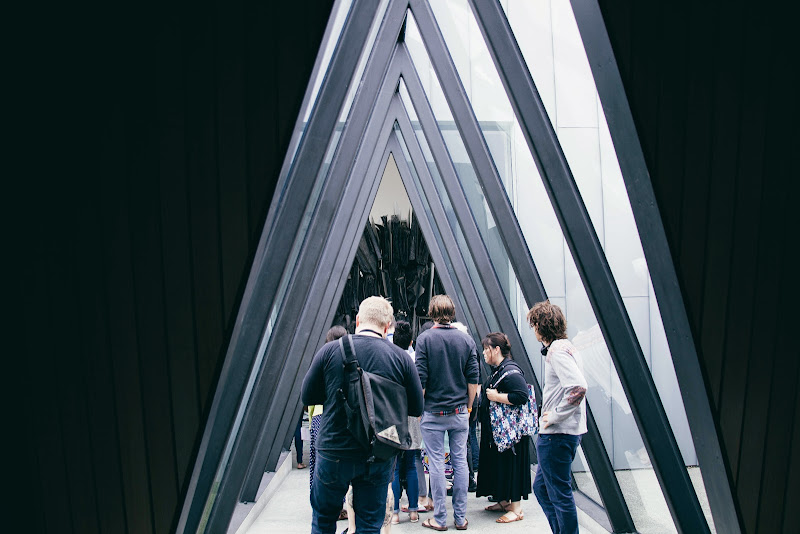
See what I mean?
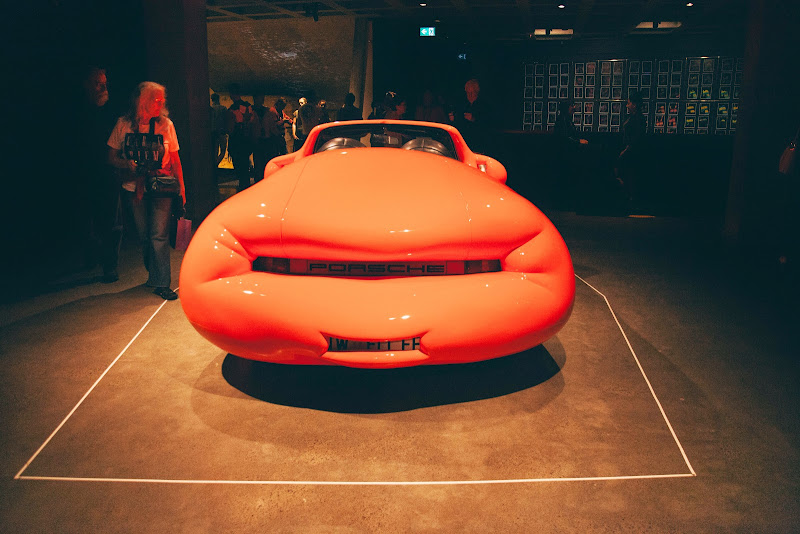
This puffed-up Ferrari was an interesting look at consumerism. It was also very cool to look at.
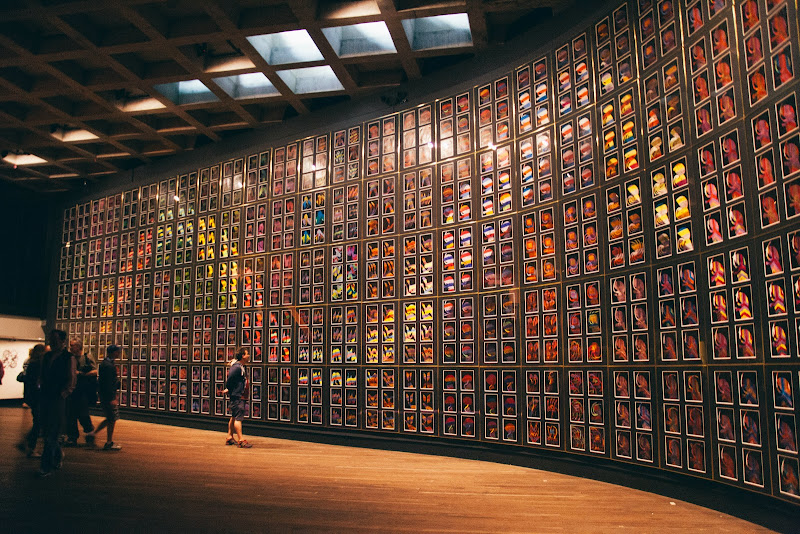
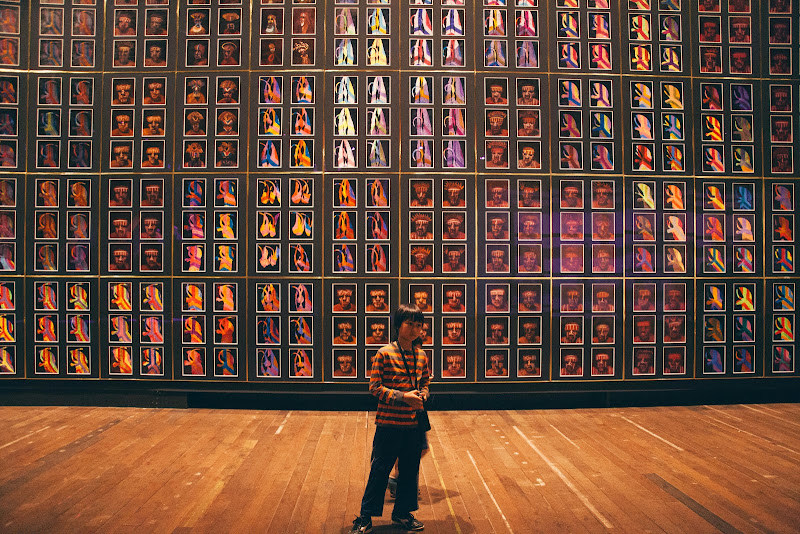
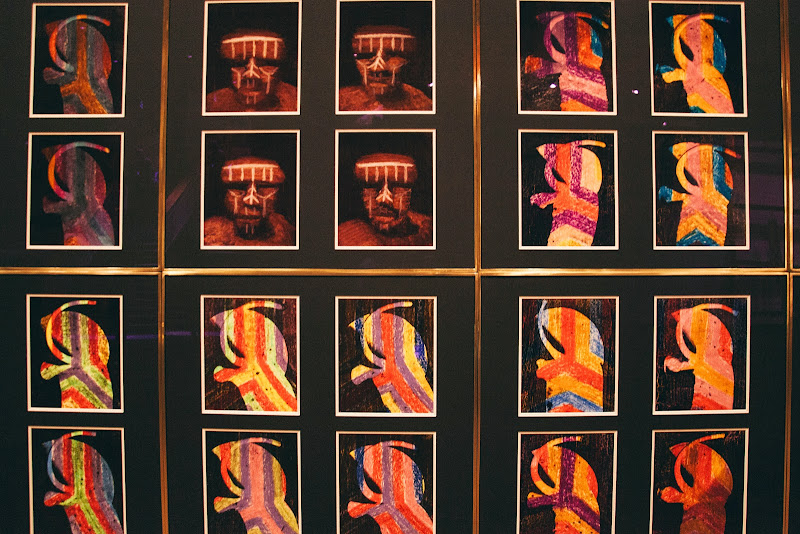
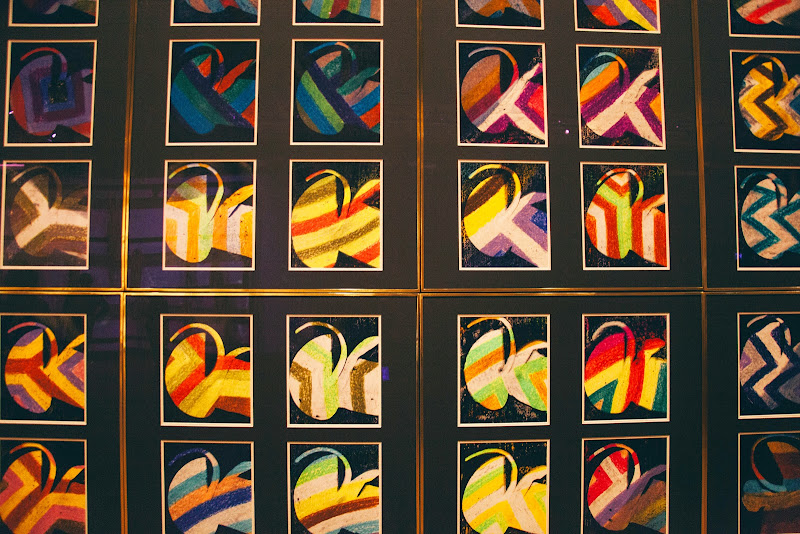
But this was my favorite – a giant mural by Australian artist Sydney Nolan. It was an enormous rainbow serpent made up of hundreds of smaller images. Just beautiful.
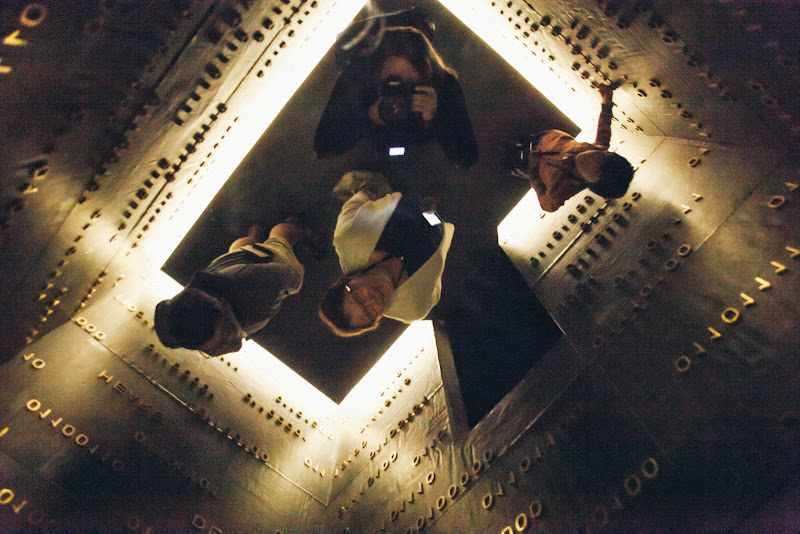
This one was fun – a spooky dark maze that led to a room with a mirror on the ceiling when you least expect it. It was creepy in a really fun, weird way.
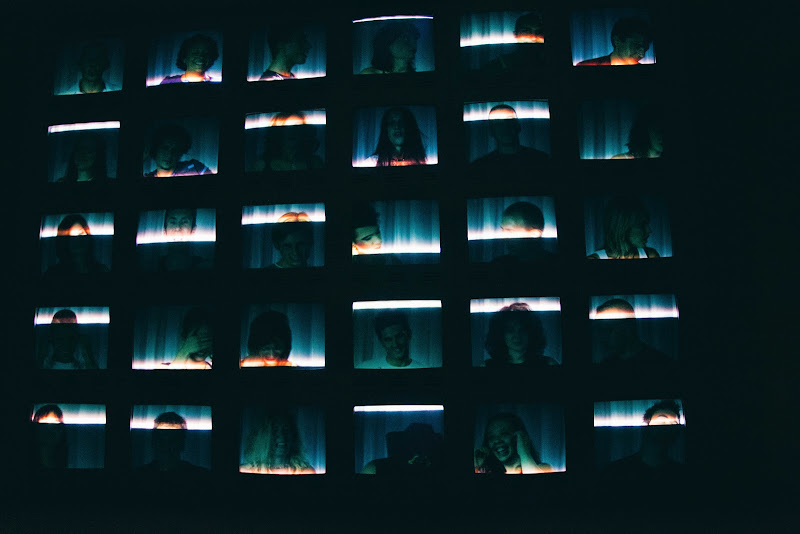
And this one had about 50 old TVs showing people all singing Madonna’s “Cherish”. The videos were recorded separately but play in synch. It spoke to my inner karaoke diva.
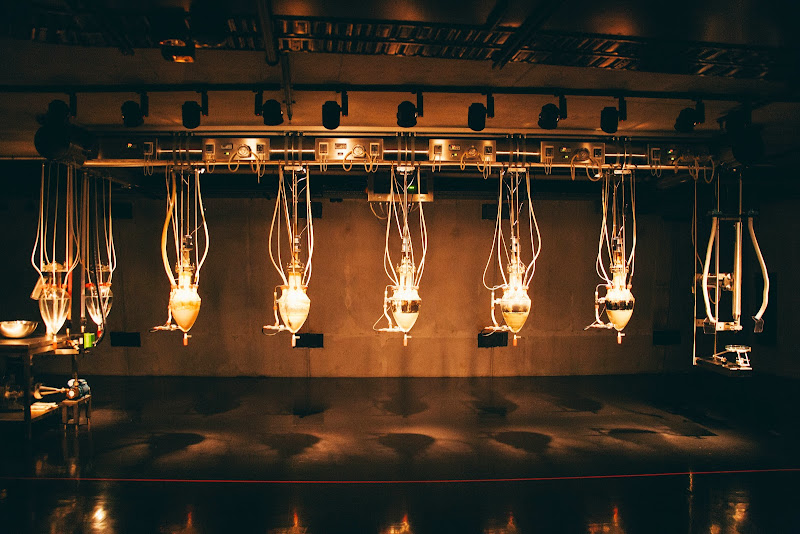
Finally, we made our way to the infamous “Digestion” exhibit. It’s set up to mimic actual human digestion so you feed it in one end and it “poops” out the other. It also smells like digestion. I’ll let that sink in.
After a good four or five hours, we decided we’d experienced enough of the museum. We made one last stop at the (poorly laid out) gift shop before heading back outside to make the most of those mirrored walls.


We also took one last look at the view.
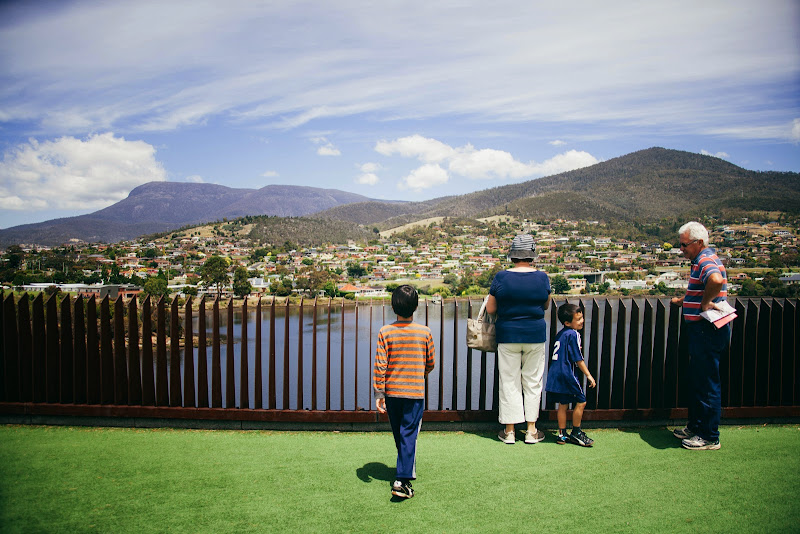
And then walked through the beer/sculpture garden which had become a lot more lively since our arrival.
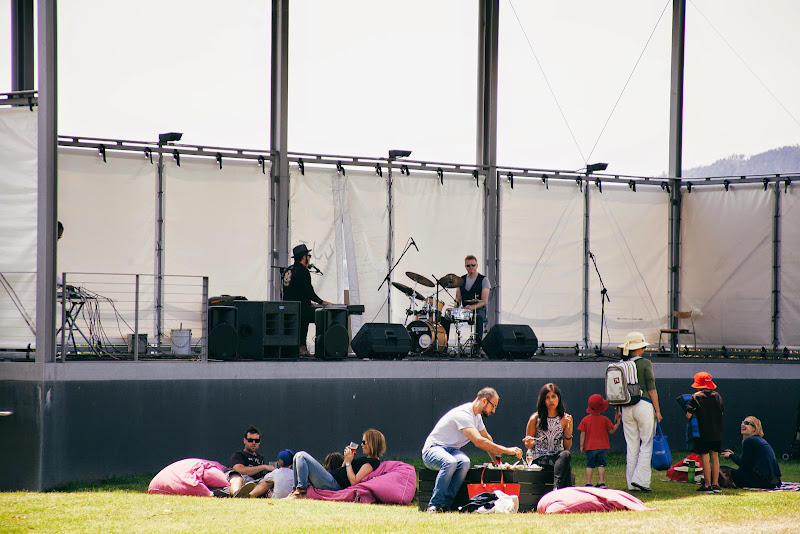
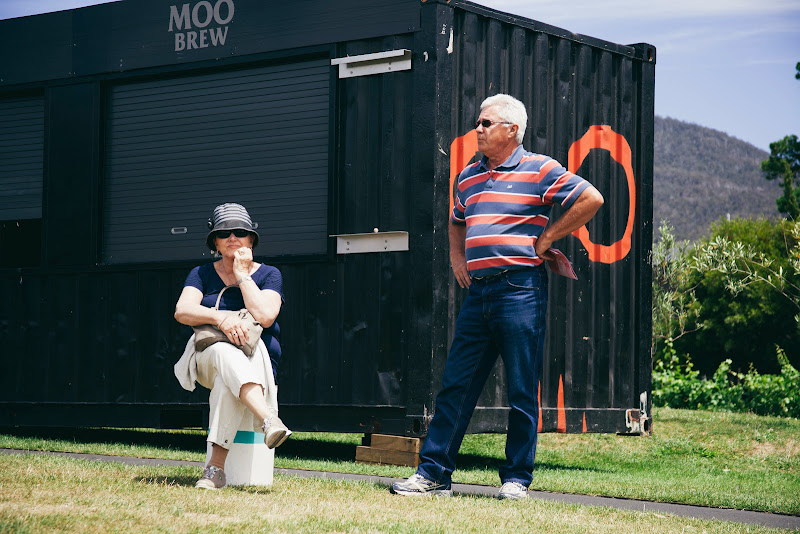
While Nan and Grandpa waited…
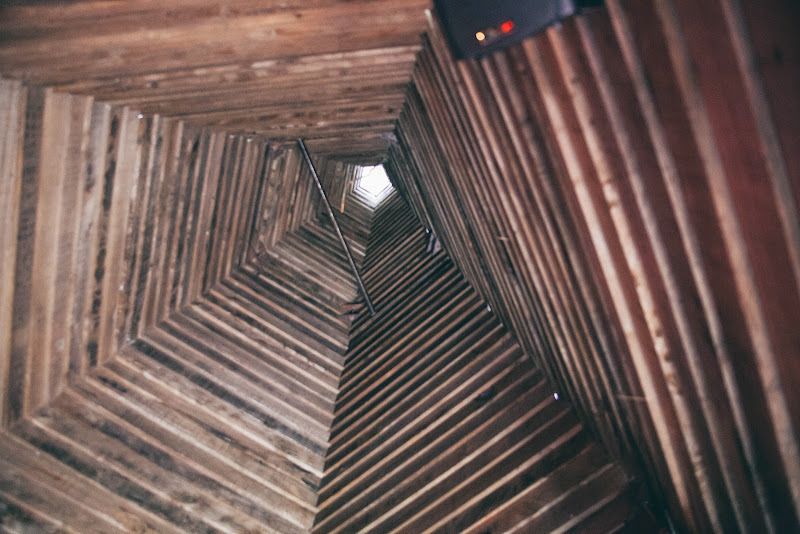
Thomas and I explored the pyramids.
Finally, we said goodbye to MONA with mixed feelings. While I enjoyed it, Kei wasn’t as thrilled. Sure, there was an air of pretentiousness about the whole experience, but it was something different and some of the artwork was beautiful and thought provoking. I’m not sure I ever need to go back, but I’m glad I experienced it just once in my lifetime.

 Nicole Ishida Photography